Getting the Best Out: Stockfisch's Astonishing Phono CableGetting the Best Out Stockfisch's Astonishing Phono Cable
The connection between turntable and phono stage is the most sensitive in the entire chain. Stockfisch's Phono-Pro shows what's possible already in the lead-in groove.
That cables affect the sound is a truism. That this effect is sometimes out of all reasonable proportion to the price of the interconnect is equally so. Experienced high-enders don't spread their cable investments over their hi-fi equipment with the proverbial watering can; they spend the money in a targeted way in the right place. And the connection between turntable and preamplifier is probably simply the most sensitive. Pure physics: moving-coil cartridges generally have a low output voltage in the range of 0.2 to 0.5 millivolts. With a resistance of 100 ohms, that results in a current of between 2 and 5 microamps. Compared with what a classic line-level device such as a CD player delivers, that is many times less.
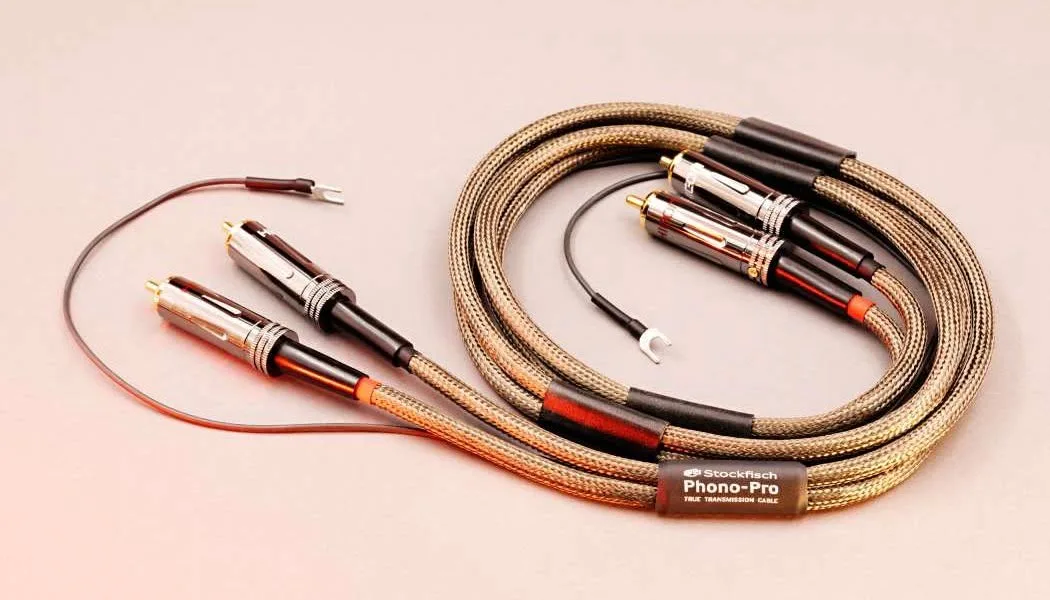
Really good phono cables – designed exclusively for this purpose – are rather rare. I remember an excellent cable from Sun Audio, and a “twisted” cable (I've forgotten the manufacturer) that sounded outstanding but also picked up radio waves and passed them on to the speakers. A few weeks ago we received a selection of phono cables from Stockfisch, a brand better (or almost exclusively) known for outstanding music productions. Following the premiere of its speaker cable, the company has now presented the “Phono-Pro” phono cable, which is available with all common connector types (RCA, SME, XLR) and costs 1,200 euros (1.2 m). Measured against the sonic progress you are guaranteed (!) to achieve, this price is entirely justified. Owners of high-quality cartridges and corresponding phono stages in particular, whether built into preamplifiers or as separate units, will be delighted by a clear gain in transparent bass reproduction and a firework of tonal colors in the midrange and treble.
There may well be other cables that reach this level. At the moment, though, I don't know of any. It doesn't even take an extensive listening test; the noise in the lead-in groove alone reveals the new quality.